
Lions, Tigers, and . . . Llamas? Exploring the Ancient American Cosmos
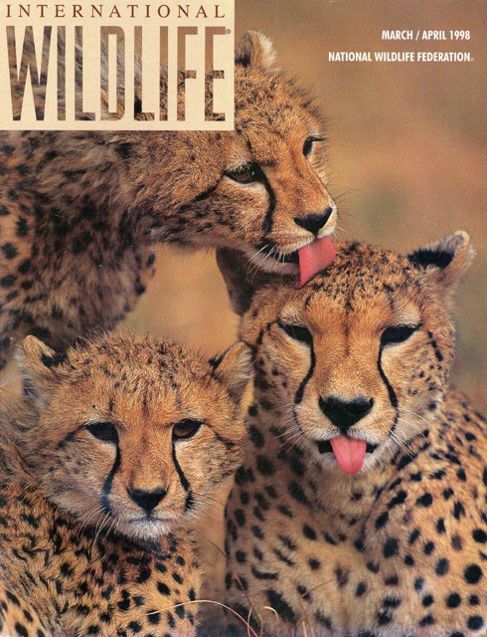
The idea for the exhibition Fangs, Feathers, and Fins: Sacred Creatures in Ancient American Art began when I subscribed to International Wildlife as a teenager. Instead of boy-band posters on my bedroom wall, I had pages torn from this magazine.
That’s what drew me to Pre-Columbian studies, to examine the cultures that existed in the Americas before the arrival of Christopher Columbus. For the people of these ancient cultures, animals helped explain the world and why things happened. Why did one person die, and another live? Why did another get sick or recover?
The answers came through a cosmological perception of the world that intimately involved animals, which helped people navigate the often-perilous world. Fangs, feathers, and fins were essential characteristics that made animals spiritually magical to Pre-Columbian cultures.
The world was divided into three realms:
- Celestial Because of their amazing ability to fly, birds were believed to travel to the Celestial Realm of the sky, where gods lived. Feather tunics like one on display in the exhibition (slideshow image #2)—treasured as more precious than gold—were invested with cosmological power.
- Terrestrial The powerful animals with fangs—like the jaguars represented in the exhibition by ceramics and stone—dwelt with humankind in the Terrestrial Realm, and fangs gave these creatures a power over death and other beings.
- Underworld Stingrays—like one shown in a gold pendant (slideshow image #3)—and other miraculous water-dwelling animals possessed fins and lived in the watery Underworld Realm.
Not only did sacred creatures dwell in these realms—and sometimes voyage from one realm to another—but gifted humans with supernatural connections could traverse the realms by transforming into different animals. Ornaments like collars depicting double-headed serpents (slideshow image #4) could define and change the human body into sacred space.
As you visit the exhibition, I hope you feel some of that power.
► Learn More Fangs, Feathers, and Fins: Sacred Creatures in Ancient American Art
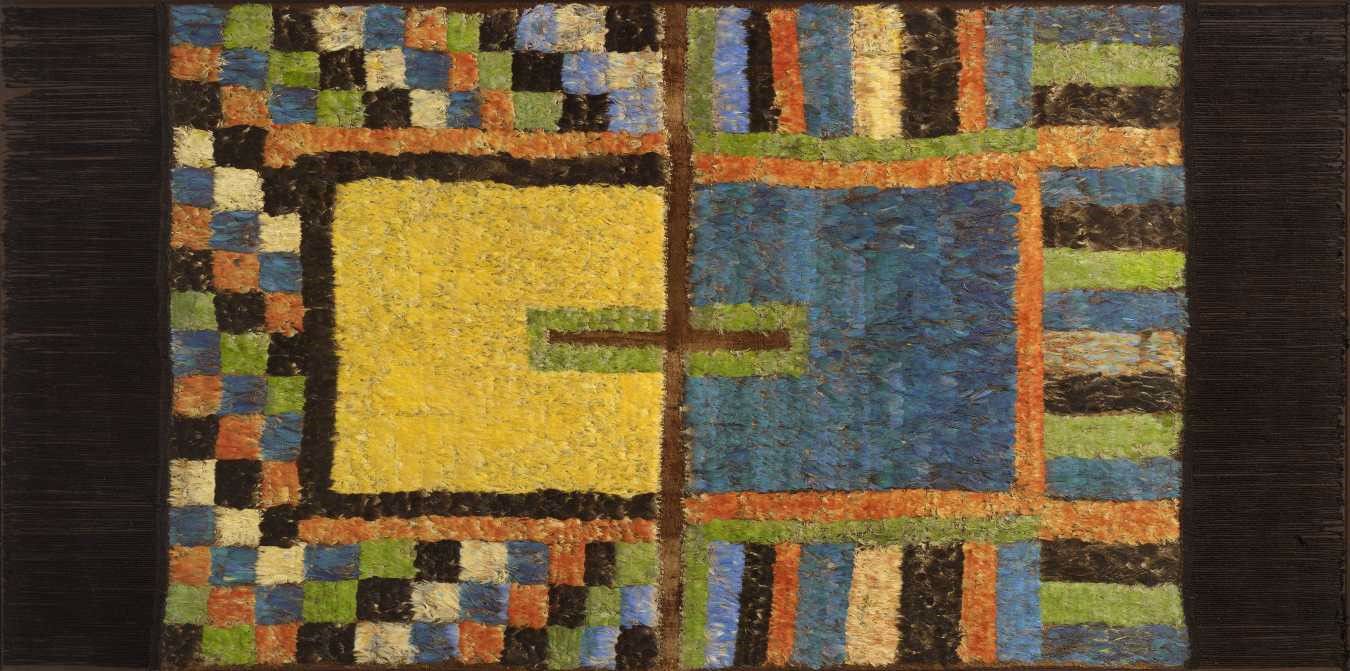
Nasca, Peru, Feather Tunic, 100 BC–AD 700, cotton and feathers, the Museum of Fine Arts, Houston, Museum purchase funded by Alfred C. Glassell, Jr. and Fayez Sarofim in honor of Peter C. Marzio at “One Great Night in November."
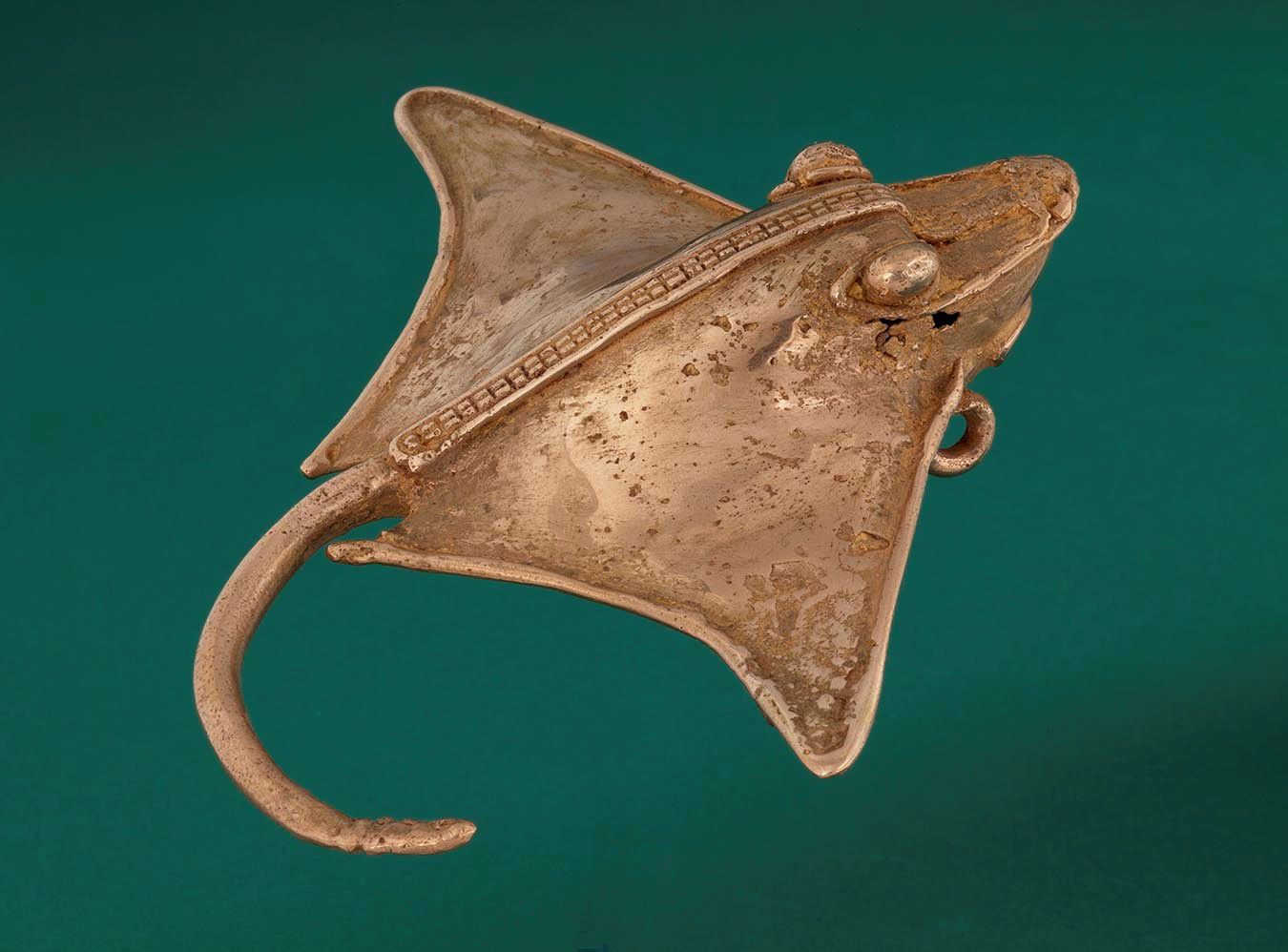
Veraguas, Stingray Bell Pendant, 400–1550 AD, gold, the Museum of Fine Arts, Houston, gift of Alfred C. Glassell, Jr.
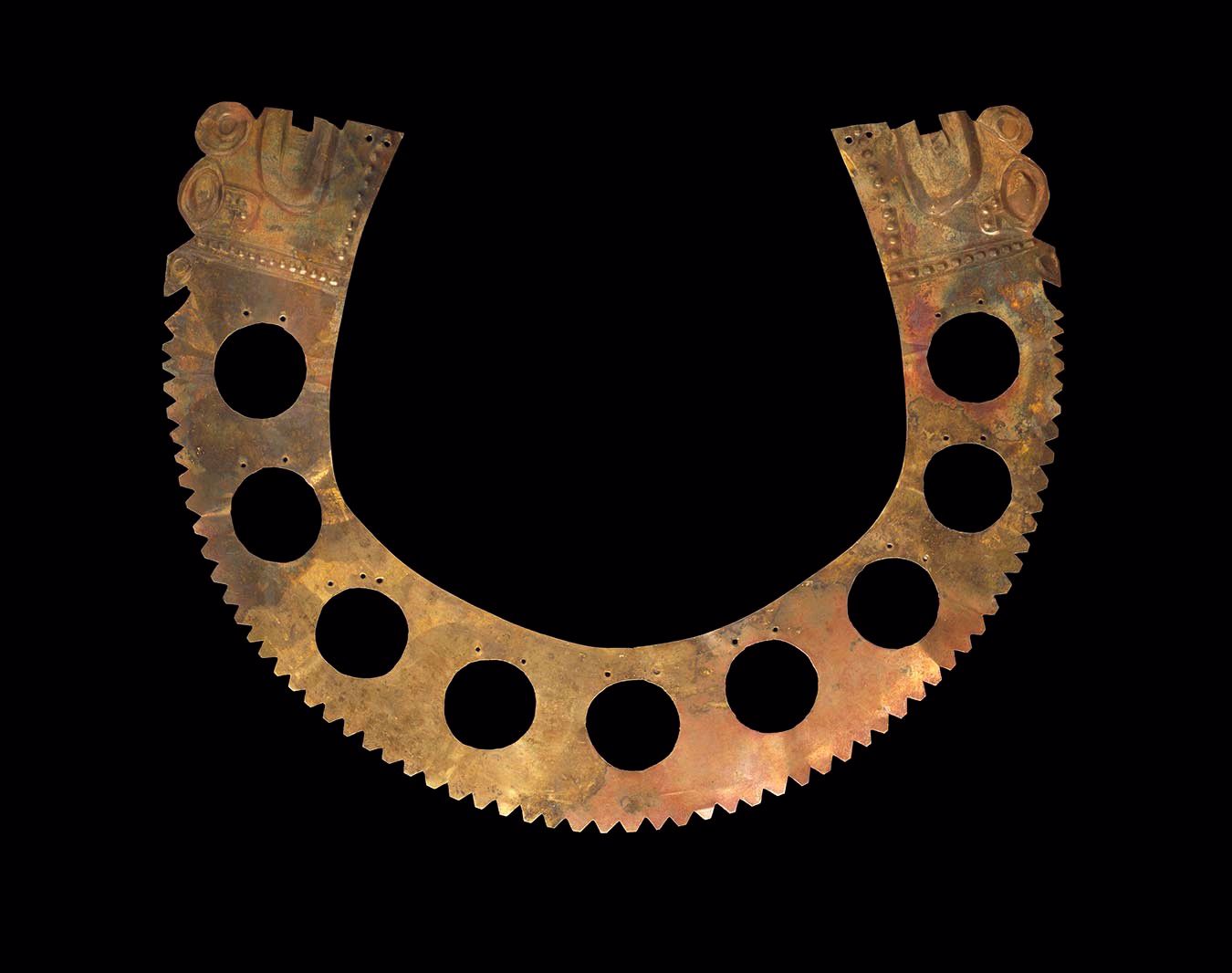
Tiwanaku, Collar, 700–1000 AD, gold, the Museum of Fine Arts, Houston, gift of Alfred C. Glassell, Jr.
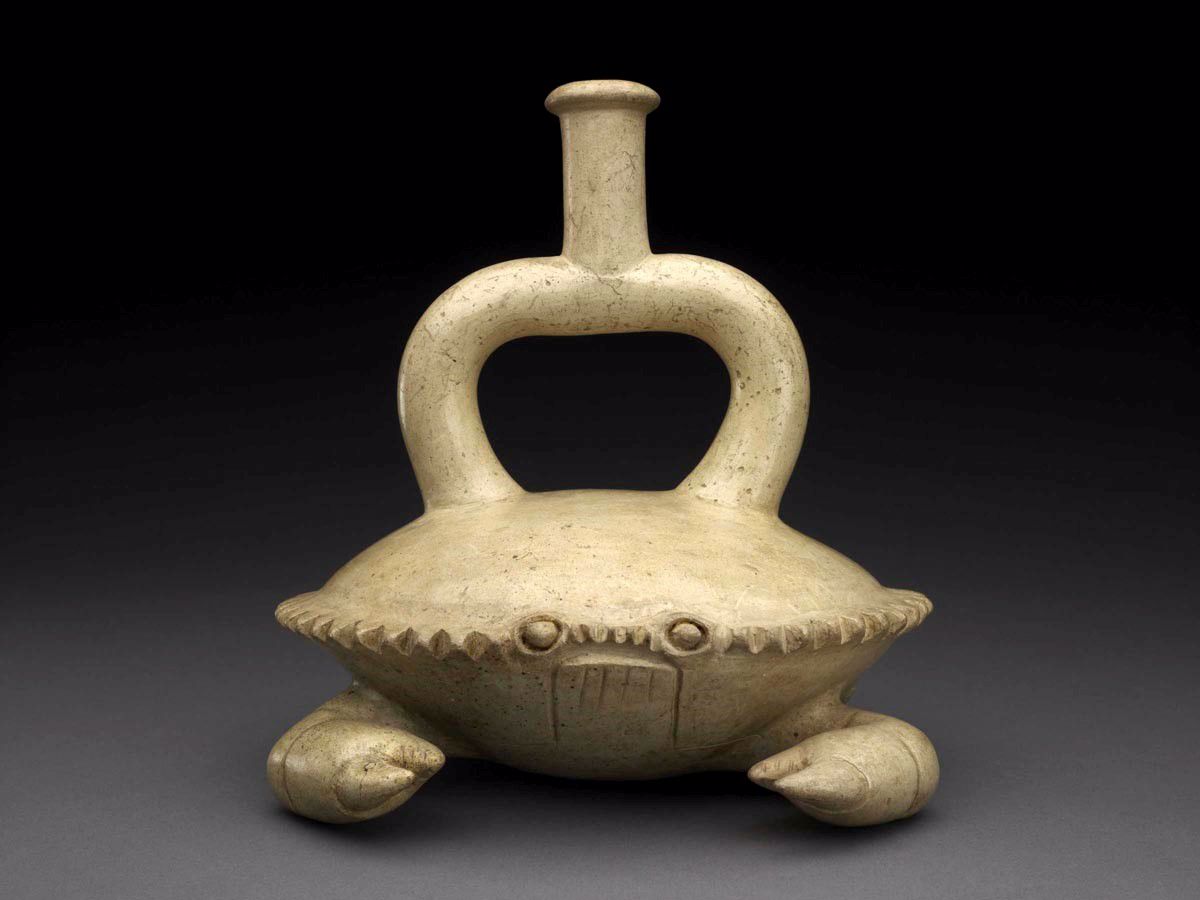
Moché, Crab Effigy Vessel, 100–800 AD, ceramic, the Museum of Fine Arts, Houston, Museum purchase funded by Frank Carroll in memory of his grandfather, Frank L. Carroll, II.
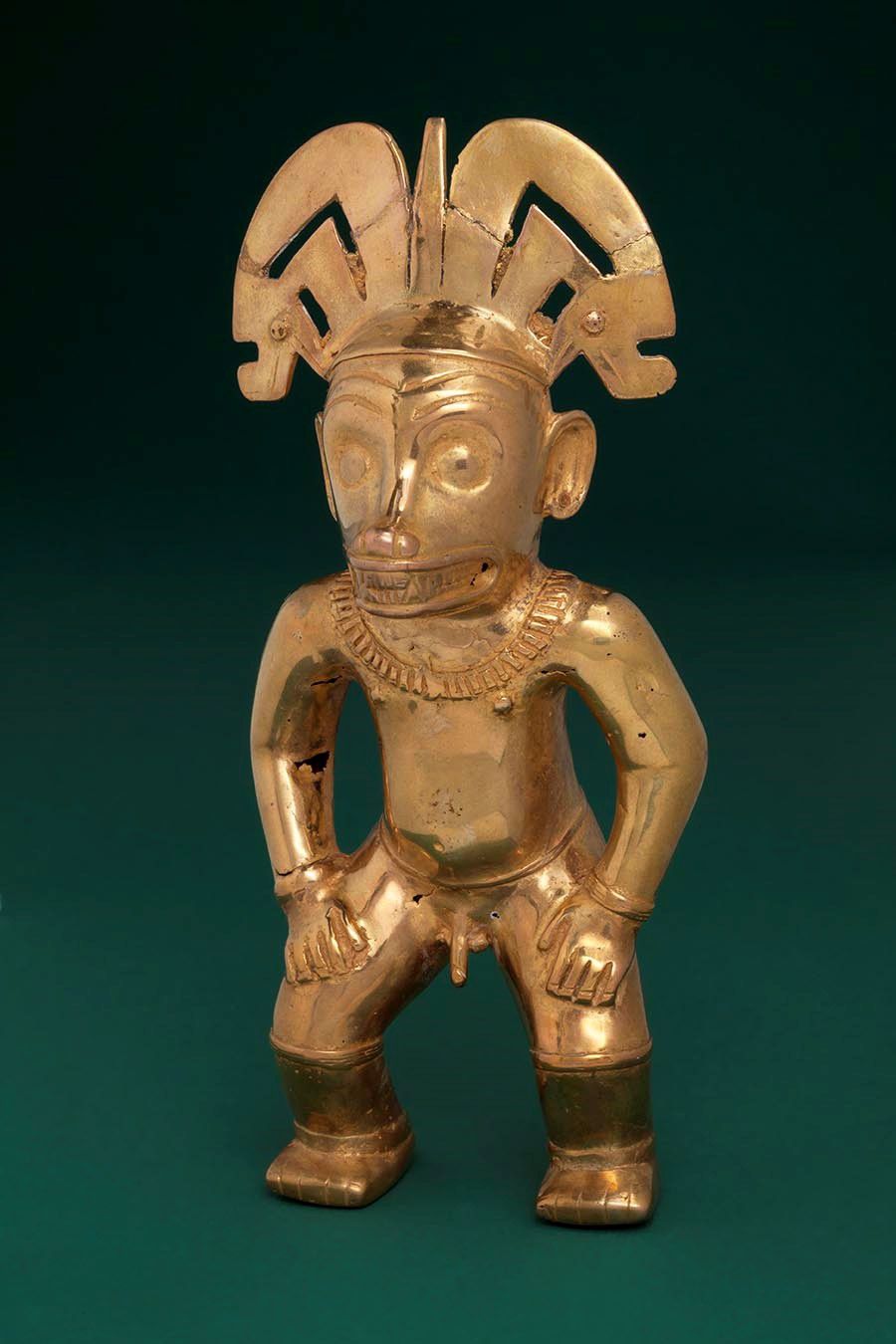
Quimbaya, Shaman in Transformation Pendant, 1–800 AD, gold, the Museum of Fine Arts, Houston, gift of Alfred C. Glassell, Jr.
Posts

At-Home Art Activity “Exploring Materials and Creating & Modifying Beads” November 15, 2022
Create your own art while exploring a variety of materials and beads, with inspiration from works in the MFAH collections.
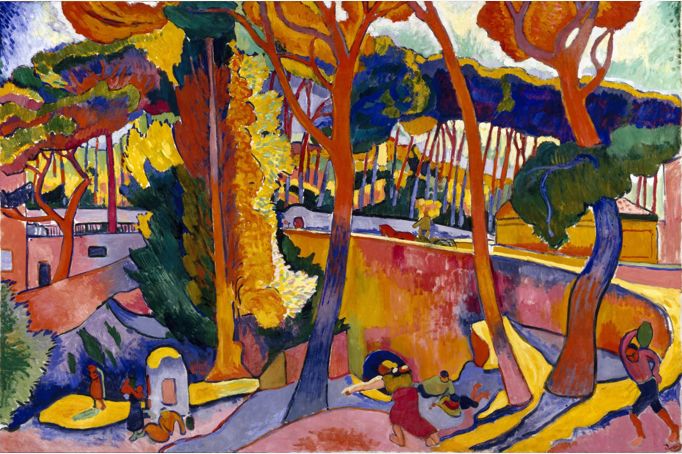
At-Home Art Activity “Exploring Fauvism and Creating Colorful Landscapes” October 10, 2022
Make your own art inspired by the Fauvist movement and André Derain’s The Turning Road, L’Estaque.
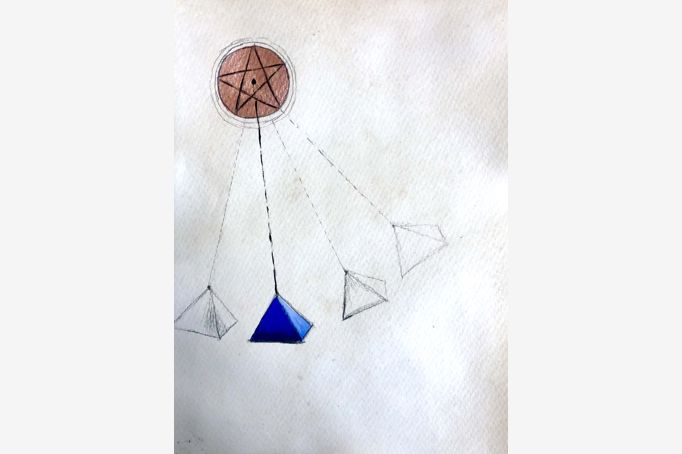
At-Home Art Activity Inspired by “Shahzia Sikander: Extraordinary Realities” May 20, 2022
Make your own art inspired by the work of Shahzia Sikander in the exhibition Extraordinary Realities.
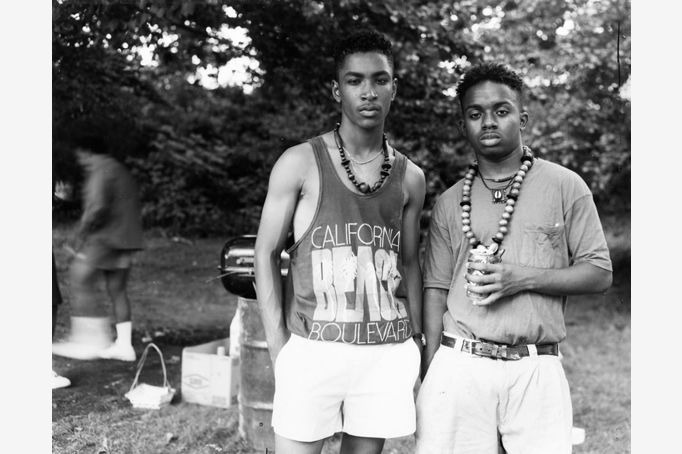
At-Home Art Activities Inspired by “Dawoud Bey: An American Project” May 6, 2022
Create your own works of art with these projects and inspiration from the photographs in the exhibition Dawoud Bey: An American Project.
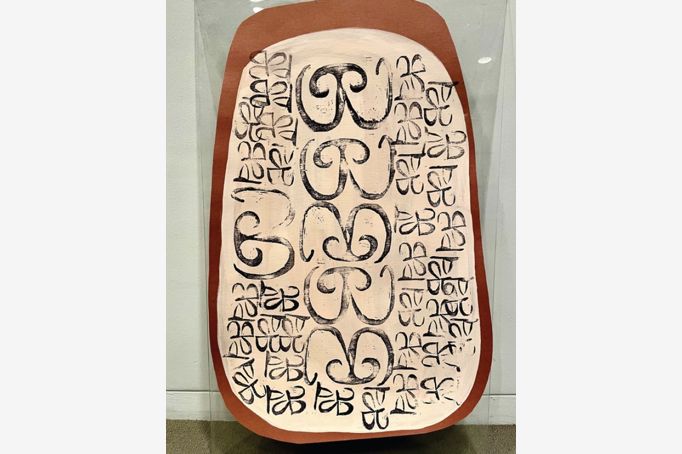
At-Home Activities Inspired by Art from the Indigenous Pacific Islands and Australia May 2, 2022
Create your own works of art with inspiration from the Indigenous Pacific Islands and Australia.